After the very first 5 years, we'll say the rate bumps up by simply a quarter percent each year. By the last year, your payment depends on $990, and you 'd pay $147,962 in interest over the life of the loan. Quantity You Pay Above Original Purchase Price $696$ 990 $307,962 $147,962 With a minimum deposit of just 3.
75% interest, your month-to-month payment would total $1,031. That consists of $894 for principal and interest, plus $137 for MIP every month. You 'd likewise pay $3,378 in upfront MIP at closing and $128,774 in interest over the life of the loan. Amount You Pay Above Original Purchase Price $1,031 $374,366 $181,366 Let's say you put no cash down on a 30-year mortgage at 3.
For this example, we'll presume your VA funding fee is $4,300 and you finance it into your loan due to the fact that you do not have any additional money on hand. That means your regular monthly payment would be $917 and your total interest paid would come to $125,963. Amount You Pay Above Original Purchase Cost $917 $330,263 $130,263 If you put 5% down and finance the rest with a at 3.
5% (or $79/month) for this example. which of these statements are not true about mortgages. Your total interest paid would come to $131,642 by the time your home loan is done, and your PMI would immediately drop off after a little over 8. 5 years. Amount You Pay Above Original Check out the post right here Purchase Price $972 ($ 893 after PMI drops off) $339,779 $139,779 If you put 20% down on a 15-year fixed-rate home mortgage at 3.
That saves you anywhere from $85,000 to $107,000 in interest charges alone! Picture what you could accomplish with that type of money in your pocket! Amount You Pay Above Original Purchase Rate $1,115 $240,624 $40,624 If we stack these 5 mortgage choices against each other, it's simple to see where the costs build up.
Now that you know the math, do not get a house with a home mortgage that'll crush your monetary dreams. To assist get the process started, get in touch with our good friends at. They're a relied on lender who in fact believes in debt-free homeownership. After that, make sure and link with a who Check over here will keep your best interests in mind and focus on serving you first in your look for the ideal home.
Homeownership can be both gratifying and a terrific financial choice for your future. However as anyone who has actually dipped their toes into the home-buying process knows, the pressure to discover and protect the "right" mortgage can feel frustrating, especially if you're a first-time house buyer. During the early phases of the home-buying procedurepossibly while you're looking into neighborhoods and schools, going shopping around for residential or commercial properties, and pin down the information of your budgetit would serve you well to do some research into the kinds of home loans readily available.
The Ultimate Guide To School Lacks To Teach Us How Taxes Bills And Mortgages Work
As you have http://devinlxcw624.theburnward.com/a-biased-view-of-what-act-loaned-money-to-refinance-mortgages actually most likely noticed, there are many home mortgage loan types available to customers. The process of requesting a mortgage can be complicated, and among the very first actions for a property buyer is to decide which type of loan will finest serve his or her needs. Some home loan candidates are newbie homebuyers, seeking to buy a house as a main house, while others are seasoned domestic property buyers, with experience purchasing houses primarily for financial investment functions in the type of lease income and asset appreciation.
Brace yourself, since the procedure definitely requires you harness your finest inner contrast consumer. You'll require to consider the ins and outs of each choice together with your personal and financial needs. To help decide a bit much easier, we've compared the benefits and downsides of each home mortgage type listed below.
The length of fixed rate loans can vary, but two of the most typical amount of time are 15 and thirty years. A 30-year fixed-rate loan is the most common, though you can conserve a lot in interest if you choose a 15-year loan. Monthly payments on a 15-year loan will be much higher than for a 30-year home mortgage, so it's most likely smart to commit only if you're positive that it works in your budgeteven in case of a financial emergency.
Nevertheless, one drawback is that if you take out a loan when rates of interest are high, you're locked into that greater rate for the entire term of the loanunless you re-finance. If you have a high set rate mortgage loan in a low rate of interest environment, you might have the ability to refinance your mortgage when rates of interest drop.
Adjustable rate mortgage (ARM) loans have a rates of interest that alters throughout the life of the loan as interest rates vary. ARMs usually have an initial fixed-rate duration of between 5 and 10 years, throughout which the rates of interest is fixed. ARMs are frequently expressed in 2 numbers (like 5/1 or 2/28), although those numbers don't follow one particular formula (they might represent years, months, number of yearly payments, and so on).
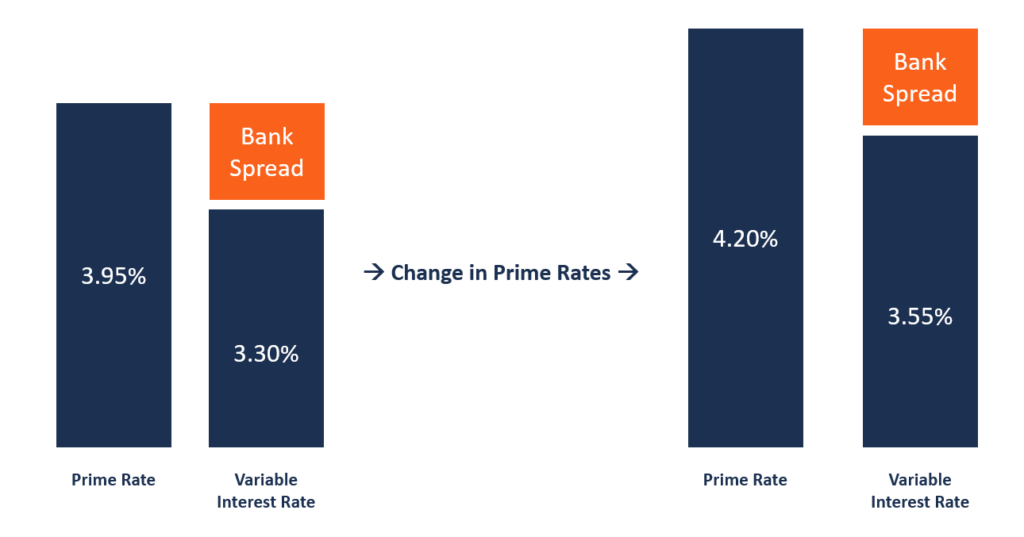
After the fixed-rate period of an ARM, the rate of interest switches to variable. The variable rate is usually set based upon a benchmark index rate that varies based on market conditions. Throughout the fixed-rate duration, the rate of interest is usually lower than the interest rate on a standard fixed-rate loan.
An ARM might work best for someone who plans to pay off their mortgage in 5 years or less, or is dedicated to re-financing prior to the ARM's rate boost. Rate boosts in the future could be significant, although there are limitations to the yearly and life-of-loan changes, generally leaving adjustable-rate mortgage-holders with much greater regular monthly payments than if they had actually committed to a fixed-rate mortgage.
The Basic Principles Of What Is The Maximum Number Of Mortgages
A conventional loan is a home loan come from by a bank or private lending institution, and is not backed or insured by the federal government. Banks and loan providers normally look at credit history and debt-to-income ratio, to name a few aspects which will differ by loan provider, in evaluating conventional loan applications. Deposits (up-front money) are typically required when taking out a standard home loan.
Conventional loans may have stricter requirements than government-backed home mortgage, which can make them somewhat more challenging to get approved for than a government-backed loan. Nevertheless, some customers may get traditional loans for a 2nd home or financial investment property since most government-backed mortgages can just be used to buy primary houses (how to rate shop for mortgages).
Traditional fixed-rate home loan loans generally need a minimum of a 620 FICO credit rating and a down payment between 5% and 20% (novice homebuyers might be able to put down as little as 3% . If you put less than 20% down, however, private mortgage insurance coverage is requiredbut you have choices.
Regular monthly PMI needs to stay in place until your loan-to-value ratio reaches 78%. (The loan-to-value ratio is the amount of the home mortgage you are looking for relative to the evaluated worth of the house. The more cash you put down, the lower your loan-to-value ratio is, and vice-versa.) A range of home types would get approved for a standard home mortgage.
Traditional loans tend to have stricter requirements for certification and may need a higher down payment than government loans. For home purchasers looking for more flexible lending requirements, government-backed loans such as Federal Housing Administration (FHA) loans and Department of Veterans Affairs (VA) loans for veterans can be attractive choices.